Game Design
Wyvern Warriors
Wyvern Warriors is a third-person aerial combat game built around fast-paced multitasking, currently in Early Access on Steam. Players take control of a wyvern and fight to defend villages, capturing and holding outposts while juggling combat against patrolling and aggressive enemies.
My role on the team was gameplay programming, with a focus on tutorialization, building the systems that teach new players how to fly, fight, and manage objectives without stopping the action to explain it.
Teaching six-directional flight without a wall of text
The game's movement is six-directional aerial flight with smooth rotational control, which is not a moveset most players bring in from other games. Rather than gate the tutorial behind menus or pop-up text boxes, I worked on introductory sequences that taught flight, fireball and flamethrower attacks, and melee combat through low-stakes, guided encounters where failure was cheap and the next prompt only appeared once the player had actually demonstrated the skill.
Tutorializing multitasking, not just controls
The core difficulty of Wyvern Warriors isn't any single mechanic, it's tracking several of them at once: holding an outpost, watching wave-based enemy spawns, and completing task-based objectives like delivering weapons or transporting water, all while staying alive in combat. The tutorial had to ramp up task density gradually instead of teaching mechanics in isolation, so I focused on sequencing, introducing one new system at a time, then deliberately stacking it against a system the player had already learned, so the multitasking itself became something players were taught rather than something they were just thrown into.
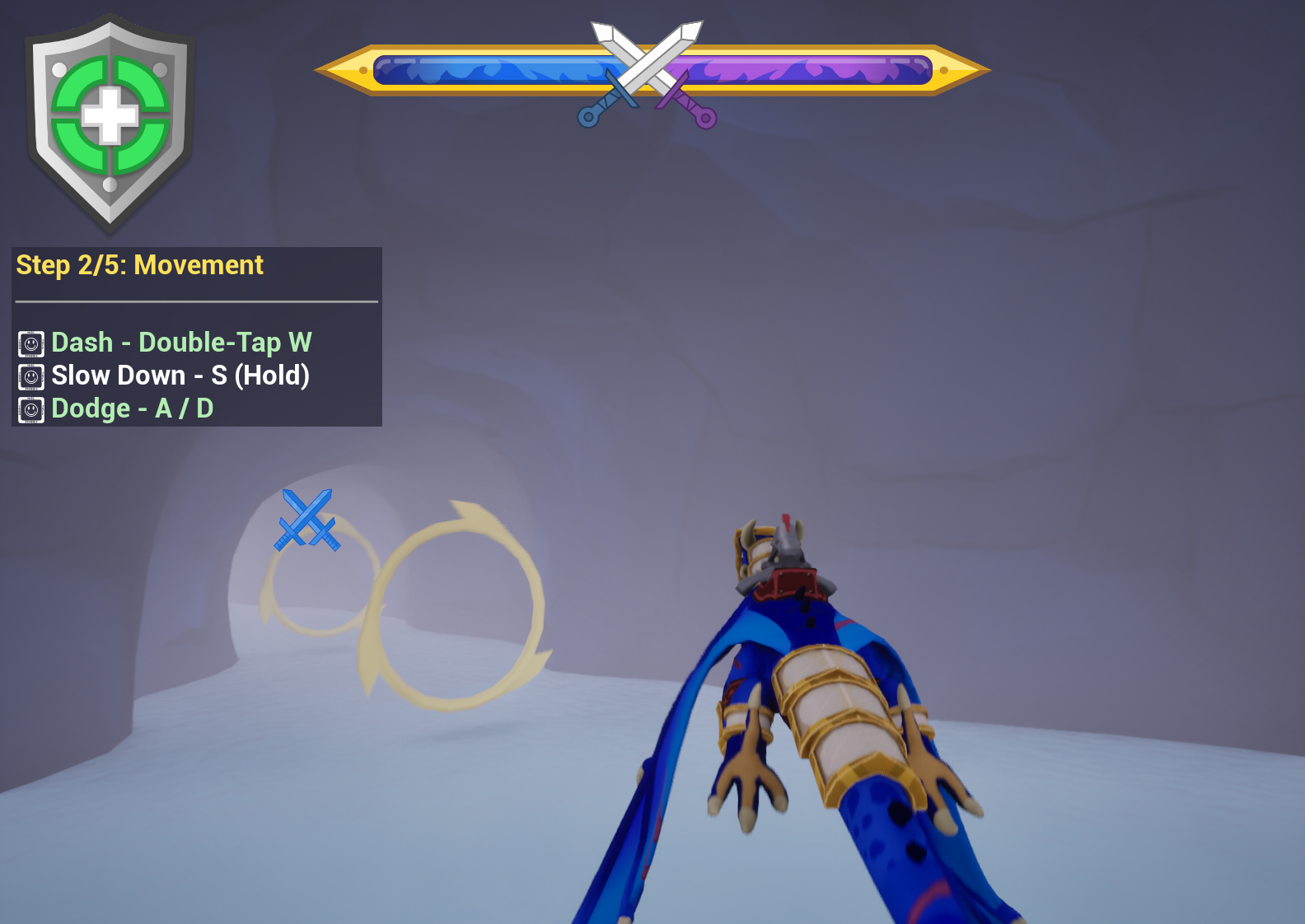
Tutorial flight sequence
Tornado Hazard in Level 2
A new hazard introduced in Level 2, the tornado, adds a layer of complexity to the gameplay by requiring players to navigate around and avoid its destructive path while maintaining their objectives. I was tasked with implementing the tornado's behavior and ensuring it fit seamlessly into the existing gameplay loop. I accomplished this using C++, implementing the physics and collision detection for the tornado's movement and impact using splines and real-time linear algebra calculations in an attempt to recreate real tornado physics.
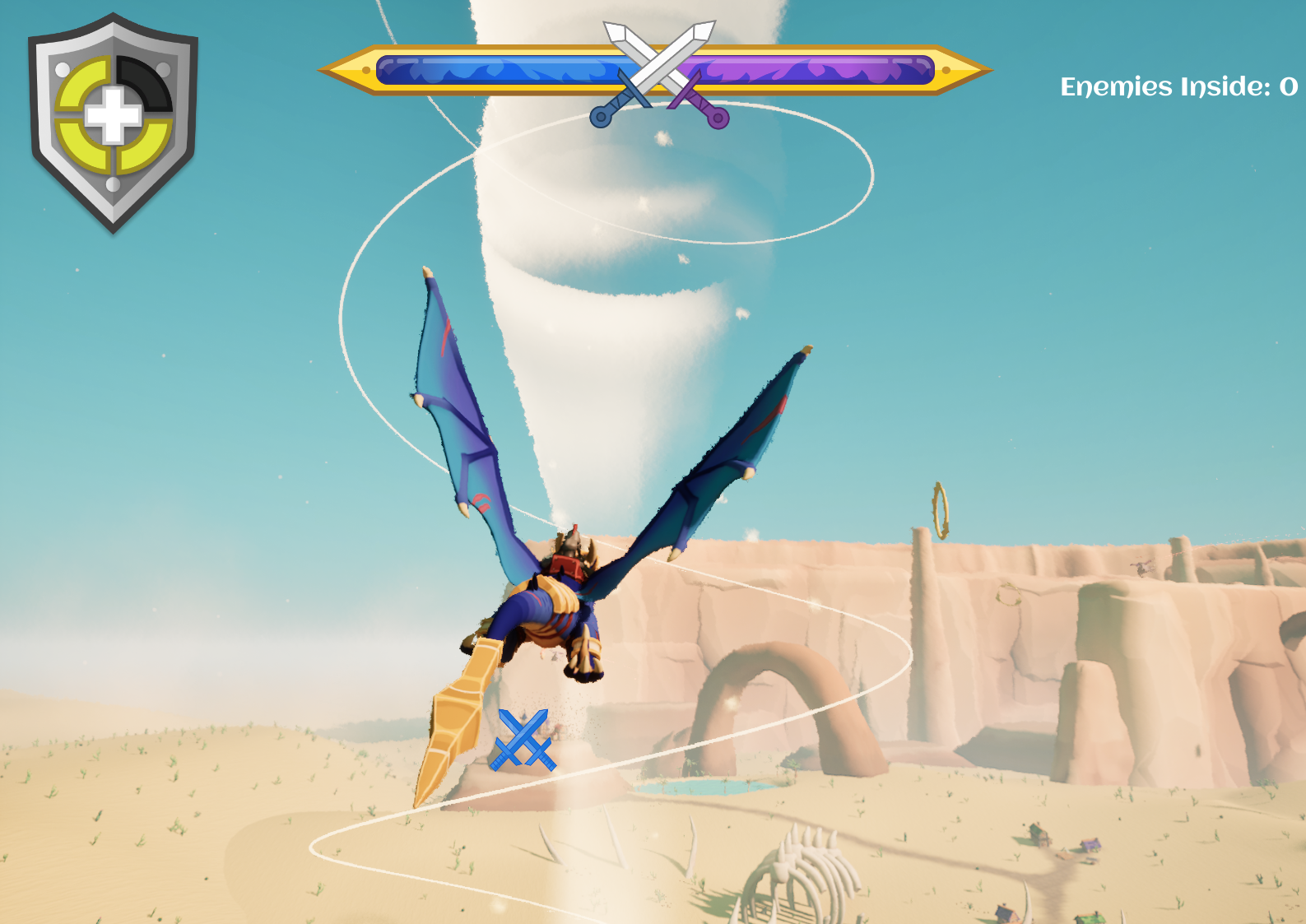
Tornado hazard in Level 2